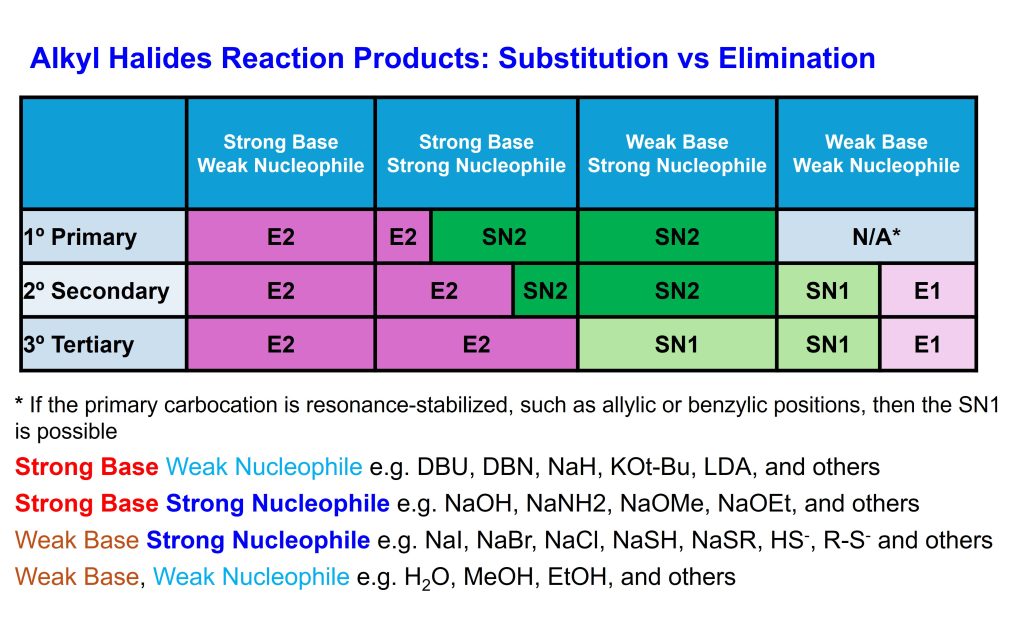
Characteristics of SN2 SN1 E2 E1 Reactions based on strong/weak bases or nucleophiles and the likelihood of product formation based on the substitution of carbons.
Cold Temperature favors SN2 over E2 or SN1 with strong nucleophile except for tertiary carbon.
Bulky base (srong/weak) is normally NOT used for SN2
Inversion of Stereochemistry (Backside attack): stereochemistry of added nucleophile is the opposite of leaving group.
SN1 Reaction
Weak Base
Polar protic solvent
Prefers the most substituted carbon
Carbocation formation at most substituted carbon
Multi-step reaction
2 activation energy peaks
Rate = k*[alkyl halide]
First order reaction
Cold Temperature favorsSN1 over E1 with weak nucleophile and weak abase.
Bulky base (srong/weak) is normally NOT used for SN1
E2/E1 Elimination Reaction Summary
E2 Reaction
Strong Base
Polar aprotic solvent
Strong small base prefers the mostsubstituted double bond (Zaitsevproduct)
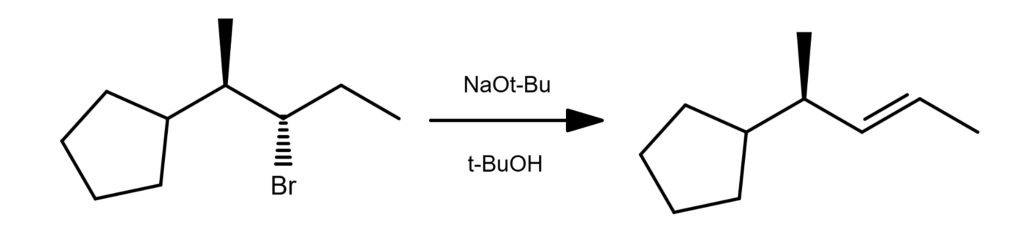
Strong bulky base prefers the leastsubstituted double bond (Hofmannproduct)
No carbocation formation
Concerted (happens in 1 step)
1 activation energy peak since concerted step
Rate = k*[alkyl halide]*[base]
Second order reaction
Hot Temperature favorsE2 over SN2 with strong base
Leaving halogen and hydrogen must be in antiperiplanar position
E1 Reaction
Weak Base AND Weak Nucleophile
Polar protic solvent
Prefers the mostsubstituted
double bond (Zaitsev product)
Carbocation formation at mostsubstituted carbon
Multi steps
2 activation energy peaks
Rate = k*[alkyl halide]
First order reaction
Hot Temperature favors E1 over SN1 with
weak base AND weak nucleophile
SN2 Reaction
Srong Base Strong Nucleophile
e.g. NaOH, NaNH2, alkoxides (NaOMe, NaOEt) etc…
Primary carbon: The majority of reaction is SN2. The minority is E2
Secondary carbon: The majority of reaction is E2. The minority is SN2
Tertiary carbon: Entire reaction is E2
Weak Base Strong Nucleophile
e.g. NaI, NaBr, NaCl, NaSH, NaSR, HS–, R-S–, etc…
Primary carbon: The almost entire reaction is SN2
Secondary carbon: The almost entire reaction is SN2
Tertiary carbon: Entire reaction is SN1
SN2 Reaction Examples
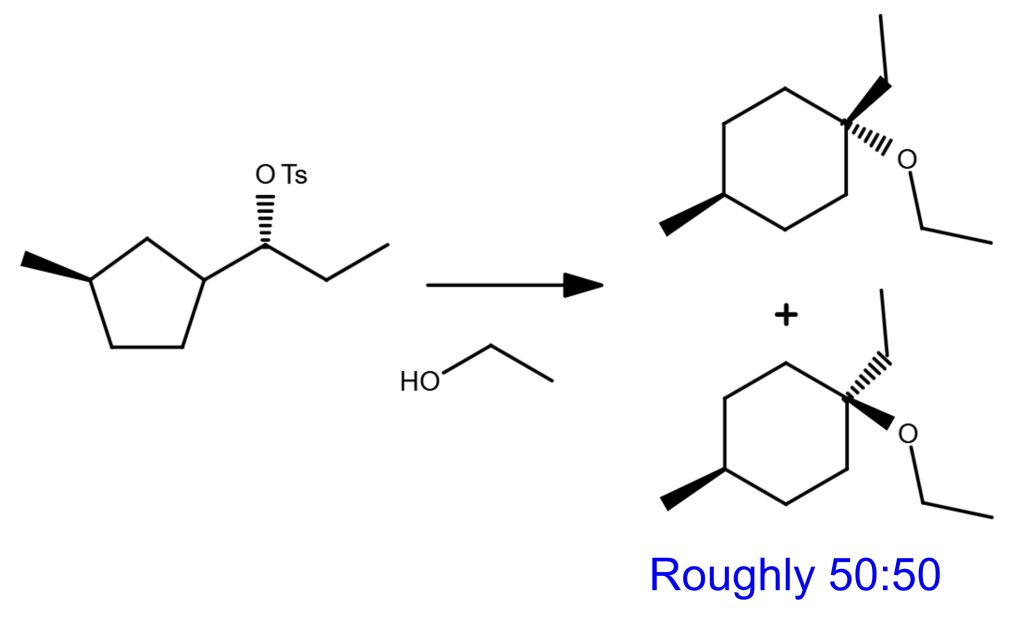
SN1 Reaction
Weak Base Strong Nucleophile
e.g. NaI, NaBr, NaCl, NaSH, NaSR, HS–, R-S– etc…
Primary carbon: No SN1 reaction (instead, SN2)
Secondary carbon: No SN1 reaction (instead, SN2)
Tertiary carbon: SN1
Weak Base Weak Nucleophile
e.g. water and alcohols (H2O, MeOH, EtOH), etc…
Primary carbon: Generally no SN1 for primary carbocation*
Secondary carbon: The Low temperature preferes SN1. The high temperature and/or poor nucleophile prefers E1.
Tertiary carbon: The Low temperature preferes SN1. The high temperature and/or poor nucleophile prefers E1.
* If the primary carbocation is resonance-stabilized, such as allylic or benzylic positions, then the SN1 / E1 is possible. The cold temperature prefers the SN1 and the hot temperature prefers E1.
SN1 Reaction Example
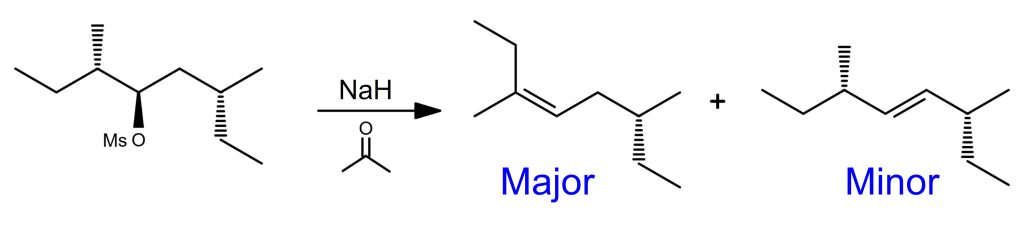
E2 Reaction
Srong Base Weak Nucleophile
e.g. Bukly bases (DBU, DBN, KOt-Bu, LDA), non-nucleophile (NaH), etc…
Primary carbon: All E2
Secondary carbon: All E2
Tertiary carbon: All E2
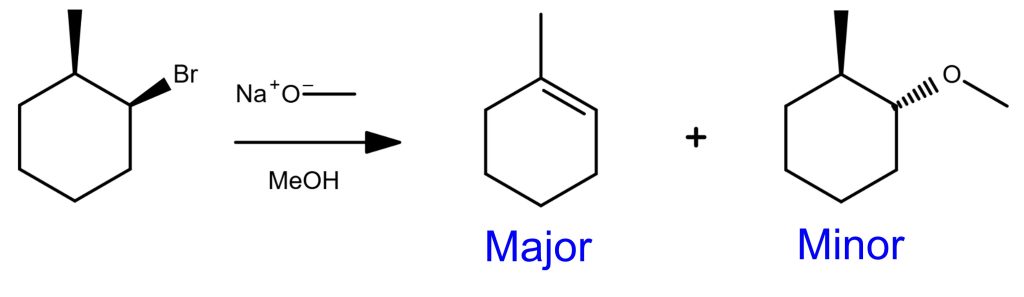
Srong Base Strong Nucleophile
e.g. NaOH, NaNH2, alkoxides (NaOMe, NaOEt) etc…
Primary carbon: The majority of reaction is SN2. The minority is E2
Secondary carbon: The majority of reaction is E2. The minority is SN2
Tertiary carbon: Entire reaction is E2
E2 Reaction Examples
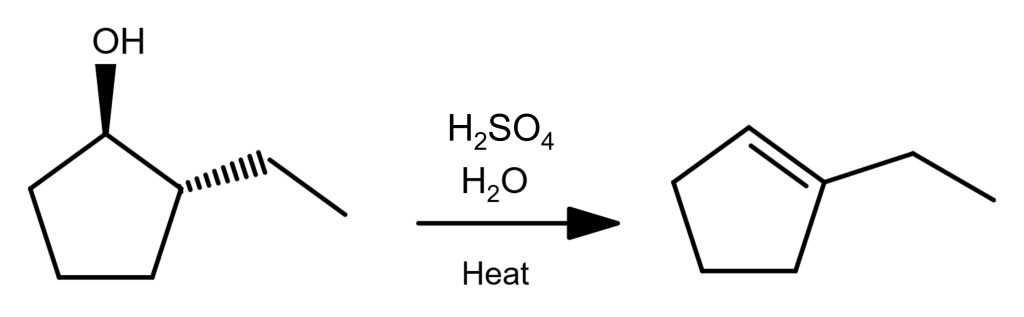
E1 Reaction
Weak Base Weak Nucleophile
e.g. water and alcohols (H2O, MeOH, EtOH), etc…
Primary carbon: Generally no SN1 / E1 for primary carbocation*
Secondary carbon: The Low temperature preferes SN1. The high temperature and/or poor nucleophile prefers E1.
Tertiary carbon: The Low temperature preferes SN1. The high temperature and/or poor nucleophile prefers E1.
No Other Type of Reagents
* If the primary carbocation is resonance-stabilized, such as allylic or benzylic positions, then the SN1 / E1 is possible. The cold temperature prefers the SN1 and the hot temperature prefers E1.